Gas vs Electric Tankless Water Heaters: Which One Performs Better?
Picking a water heater isn’t just about hot showers. It hits your energy bills, your future plumbing costs, and honestly, how comfortable your whole house feels. Tankless units have taken off because they only fire up when you actually need hot water. So gas or electric, which one wins?
Depends on a lot of factors. For example, your home’s energy setup, how much hot water your family requires on an average, what the installation involves, the space you’ve got, your budget, all of these matter. Once you understand how each system works, replacing that old unit gets a lot less confusing.
What Is a Tankless Water Heater
Also called an on-demand unit, it heats water the moment you turn the tap. Forget a tank holding gallons hot around the clock.
The mechanism works like, cold water flows in, a gas burner or electric element heats it instantly, and it’s sent straight to your faucet or shower head. Here’s why people are switching:
Hot water on tap- Way less energy lost
- Takes up far less space than a bulky tank
- Usually cheaper to run long-term
- Lasts longer if you stay on top of maintenance
Gas and electric water heaters don’t behave the same, though. Before you pick one, it’s worth understanding how each handles your household’s demand and can be beneficial.
How Do Gas and Electric Tankless Water Heaters Work
Both types skip the tank. That’s where the similarities stop.
Gas units burn natural gas or propane. Turn on the tap, and a burner heats the water on the spot as it runs through.
Electric versions also eliminate the flame. Heating elements do the job instead, water flows past them and comes out hot.
Neither one keeps a reserve tank sitting around. But capacity, venting, and whether your home’s set up for gas or wired for the electrical load can make one option a much easier install than the other.
Gas vs. Electric Tankless Water Heaters: Key Differences
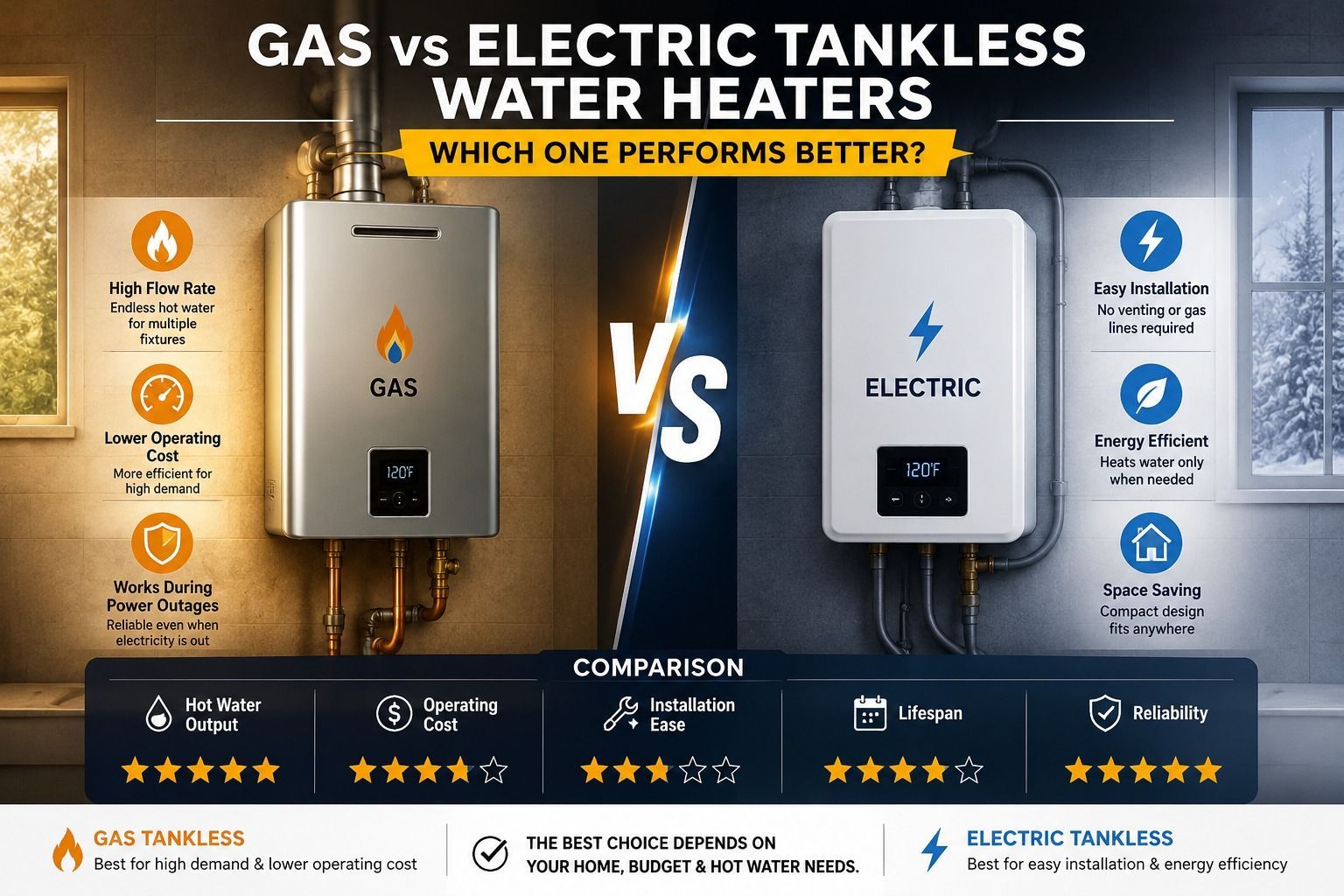
Gas vs electric tankless heaters really comes down to what you’re already working with in your walls. Gas units push out more hot water at once, which matters if your place tends to run the shower, dishwasher, and washing machine at the same time but that output comes at a cost. You’ll need proper venting for the exhaust, and depending on the unit, the gas line itself might need upgrading before installation.
Electric models sidestep all of that. No combustion, no vent to install and the smaller footprint makes them a fit for tighter mechanical spaces. The catch shows up on the electrical side instead, a high-output electric tankless heater draws serious power, so your panel and wiring need to be able to back it up before you install.
Pros of Gas Tankless Water Heaters
Pros of Electric Tankless Water Heaters
High hot water output
Compact design
Suitable for larger households
No gas combustion
Strong performance for simultaneous water usage
No exhaust vent required
Works well in homes with an existing natural gas supply
Suitable for homes without natural gas service
How to Turn Off Your Water Supply in the House
Every homeowner runs into this at some point, a pipe bursts, a water heater connection fails or a leak just becomes irritating. Most people never touch the main shut-off valve until they’re standing in an inch of water.
- Find the main shut-off valve. Usually it’s near where the main line enters your house, but the exact spot depends on your home’s layout
- If it’s a wheel-style valve, turn it clockwise. If it’s a lever-style valve, turn the handle until it sits perpendicular to the pipe.
- Open a faucet once the valve’s off. This relieves pressure still sitting in the lines.
- Go check the affected area. Make sure the water’s actually stopped.
- Still flowing, or can’t find the valve at all? Call a plumber.
All-Tex Plumbing recommends cutting the main water supply the second a serious plumbing emergency hits, it buys you time and limits the damage while we are on the way.
5 Plumbing Tips Every Homeowner Should Know
New water heater install or just staying on top of maintenance, these five habits go a long way toward protecting your home.
1. Know your main water shut-off
2. Watch for leaks
3. Keep up with water heater maintenance
4. Don’t shrug off low water pressure
5. Book routine plumbing inspections
A regular checkup flags problems while they’re small and cheap to fix, instead of after they’ve become an emergency call. It’s also a good chance to find out if your water heater’s actually sized right for your home.
Gas vs Electric Tankless Installation Requirements and Costs
Cost isn’t just about the unit price. It depends on home’s existing plumbing and utility infrastructure
Going for a gas tankless water heater? You might need new gas lines, proper venting, a condensate drain on some models and extra safety work.
Going for an electric tankless water heater? It needs enough capacity, dedicated circuits, and correct wiring and sometimes a full panel upgrade too.
That’s why comparing MRP prices alone can be misleading. Have a plumber look at the whole setup before you choose to pick one.
Which Tankless Water Heater Is Right for Your Home
The choice should depend on your house, not personal preference. A large household running through hot water fast, gas tankless holds up better under that kind of demand. A smaller footprint or no natural gas line to the property then electric tankless usually makes a better fit.
Stuck between the two? A plumber going through your actual setup will get you a straight answer faster than any comparison or price chart.
All-Tex Plumbing covers water heaters, pipes, leaks, and sewer work for Houston homes and businesses. Need it looked at? Call any hour.
You might also like
BLOG