Sewer Cleanout Installation and Sewer Cleanout Maintenance
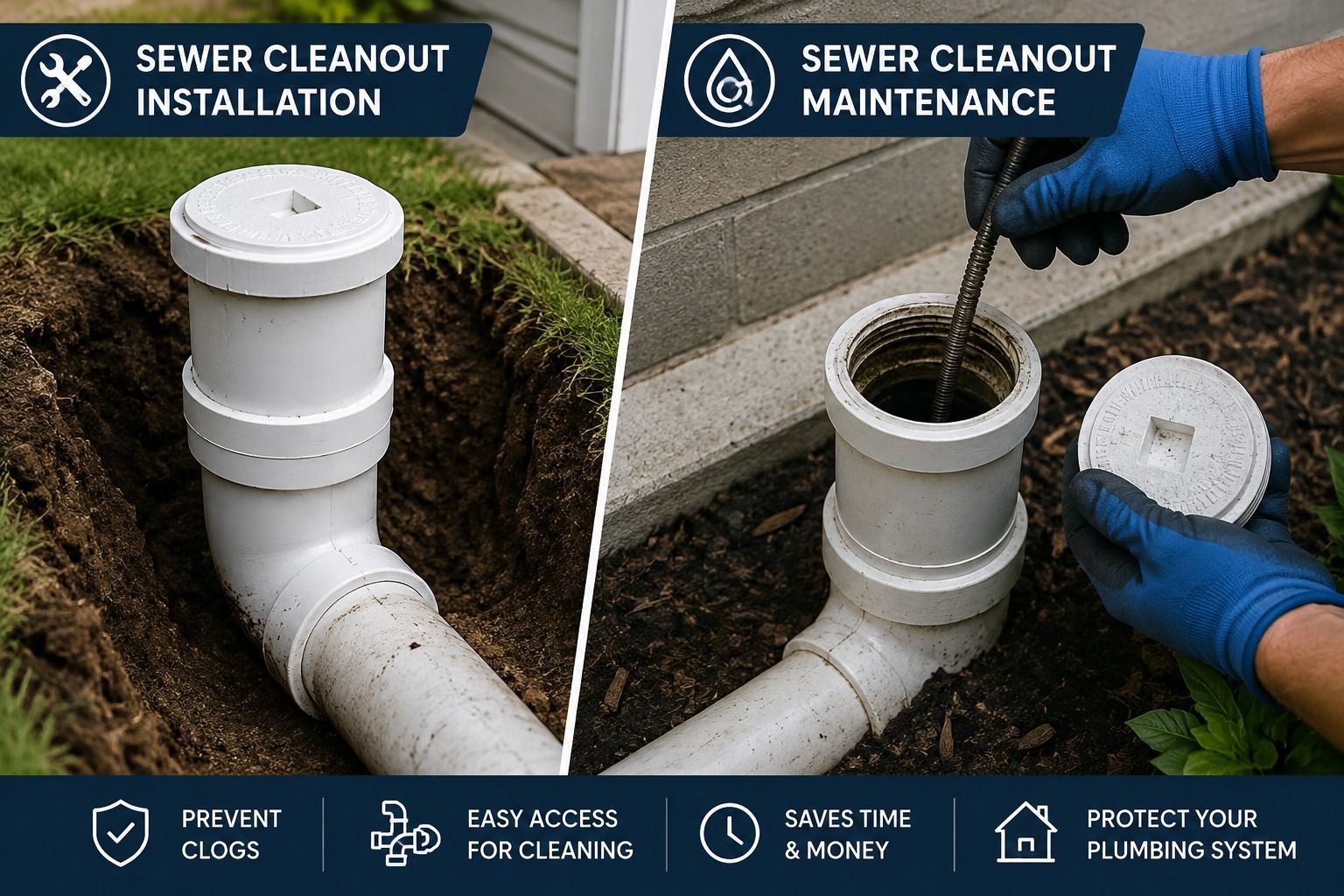
A sewer cleanout gives plumbers direct access to a property’s main sewer line. It works under a simple process. The cleanout has a removable cap. The plumber takes it off, and has a straight path into the pipe. From there they can run drain-cleaning tools or a camera through to inspect or clear the line.
This matters most when problems keep coming back such as, slow drains, repeat clogs, sewage backups. A cleanout that’s installed right and easy to reach turns a big repair into a quick one. Most people don’t think about their cleanout until something backs up. If your drains clog often or you don’t know where your cleanout is located, get a plumber to check it.
What Is a Sewer Cleanout
It’s essentially a shortcut into your sewer line, a capped opening that lets a plumber in without digging up your entire setup. Pop the cap, and there’s direct access to the pipe. When something clogs in, the plumber pops the cap and inserts required tools straight through the cleanout.
Why Is Sewer Cleanout Installation Important
No sewer cleanout on your property? Finding the main line can be time consuming. Plumbers sometimes need to remove fixtures or excavate the yard just to reach the pipe.
A properly installed cleanout skips all that. It gives you a direct point of entry for cleaning, inspections, and repairs, so nobody has to guess where a problem starts or tear up the yard to find out.
Here’s what it actually gets you:
Direct access to the main sewer line- Sewer cleaning that doesn’t drag on
- Inspections without the runaround
- Blockages that are easier to pinpoint
- Less excavation, period
- Faster response when emergency repairs come up
- Simpler sewer cleanout maintenance, this year and every year after
Older homes benefit the most. If your property’s had more than one sewer scare already, adding a cleanout now can spare you a bigger headache later.
Step-by-Step Sewer Cleanout Installation
Every property is different. So, how a sewer cleanout installation process actually goes, depends on the pipe material, depth, sewer layout and local code requirements. Here’s how a professional plumber typically handles the job.
1. Locate the Main Sewer Line
The first step is to find the main sewer line. Plumbers pull this off using existing access points, property records, inspection cameras, or specialized locating tools. Accurate location means the new cleanout ends up exactly where it needs to be.
2. Choose the Cleanout Location
Not every location is suitable. The cleanout has to be somewhere easy to reach, because sooner or later someone’s coming back for cleaning or inspection.
Before picking the spot, the plumber factors in everything that makes the spot a good one.
3. Expose the Sewer Pipe
Underground pipe means digging. The plumber excavates just enough to expose the section where the cleanout will connect. Careful excavation keeps the yard, driveway, or whatever’s up top from taking unnecessary damage.
4. Connect the Cleanout
Now the cleanout fitting goes in. It connects to the existing sewer line and alignment matters here. The sealing is equally important. A loose connection means leak down and that’s a headache.
5. Install the Cleanout Cap
As a hardware step, a removable cap goes over the access opening. It keeps dirt, debris and anything else out of the sewer line but still pops off easily when a plumber needs access again.
6. Test the Sewer Connection
Once everything is connected, the plumber runs a test. Water needs to flow through cleanly, no leaks, nothing backing up. If the connection passes the inspection, it is good to go.
What Is Sewer Cleanout Maintenance
Sewer cleanout maintenance is all about keeping the access point clear, capped, and ready to go. When a plumber needs to get into the main line fast, a clogged or hidden cleanout slows everything down. A few things worth checking on regularly:
Clear soil, mulch, or debris away from the cleanout- Make sure the cap is on tight and undamaged
- Look for cracks around the fitting
- Watch for water or sewage pooling nearby
- Book a professional inspection now and then
- Deal with recurring sewer issues before they turn into a real problem
Signs Your Sewer Cleanout Needs Attention
Catching the warning signs early is what keeps a small sewer issue from becoming an expensive one. Watch for:
Drains clogging often- Several slow drains at once
- Sewage smell around the property
- Gurgling sounds from drains
- Standing water or sewage near the cleanout
- A cracked or missing cleanout cap
- Wastewater coming back up through sinks or tubs
What Is Sewer Repair
Sewer repair means fixing whatever’s gone wrong with the line. Blocked, leaked, cracked, or just old and failing. At times, roots get in, pipes age and shift, connections fail. There’s more than one way a sewer line can get damaged. The fix depends on the problem.
All-Tex Plumbing covers sewer repair and maintenance for homes and businesses throughout Houston. Wondering when to call us? Here’s when:
- Backups happening more than once
- Several drains clogging at the same time
- A sewage smell that won’t go away
- Water pooling near the cleanout
- Cracks, shifting, or visible damage to the sewer line
- A damaged cleanout cap
Having a cleanout on the property helps here too. It gives plumbers a direct line in for inspection, cleaning, and a lot of repair work, without wasting much time.
Keep Your Sewer Cleanout Ready
Sewer cleanouts don’t get attention until something backs up. By then it’s a bigger job. A properly installed cleanout gives your plumber fast access to the main line for cleaning, inspection, and repair and regular sewer cleanout maintenance keeps that access point working when you actually need it.
Call All-Tex Plumbing for sewer cleanout installation and sewer cleanout maintenance in Houston and Lafayette today!
You might also like
BLOG